As of May 2026, three different home-value trackers gave Dunbarton, New Hampshire three different medians. One national listing site put the asking-price median at $569,000. Another, drawing from that same window of closed sales, landed on $607,000. A third page on that identical platform showed a sold-price median of $565,000, down 16 percent year over year, while a separate rolling twelve-month figure on the same site put the median at $580,000, a 13 percent decline instead. Reported days on market for that stretch ranged from 13 to 29, depending on which page you opened.
None of these sources is wrong, exactly. They are all just describing a market too small to produce a stable number.
Why the price keeps moving
That same May 2026 tracking window showed roughly 41 homes sold in Dunbarton over the trailing twelve months. Spread across a year, that is three or four closings a month, some months fewer. In a town that thin, one higher-priced acreage sale or one stripped-down land parcel can swing the median by tens of thousands of dollars without any actual shift in what the town is worth. A median calculated from three or four transactions is not a trend. It is a coin flip that happened to land on a number.
This matters if you are cross-shopping Dunbarton against a town like Weare or Hopkinton, because the instinct is to line up the medians side by side and treat the gap as meaningful. In a market with hundreds of annual sales, that comparison holds up. In Dunbarton, the median is noise wearing the costume of a trend line. The number worth tracking is not the price. It is what the town just did to its own rulebook.
The vote nobody outside Dunbarton noticed
Every March, Dunbarton holds its annual town meeting, and this year's version was fast. Voters worked through all 13 warrant articles in about an hour, approved a $4.04 million operating budget without pushback, and kept up a 250-year tradition of naming two newlyweds as the town's Hog Reeves, a ceremonial post once responsible for keeping wandering swine off the roads.
Buried in that same short meeting were three zoning amendments that quietly rewrote what a Dunbarton lot is allowed to do.
The Planning Board's own language on the animal-setback change is worth sitting with: it called the prior 100-foot rule "overly restrictive on smaller lots," a rare admission from a zoning body that its own ordinance had been getting in the way of how people actually live in town.
Here is what changed:
- Animal housing setbacks dropped from 100 feet to 50 feet from any property line. The Planning Board voted 7-0 to recommend it after the Building Department flagged repeated resident questions about the old rule. Fifty feet is now the standard setback used across most of the town, so this brought animal structures in line with everything else.
- Riding academies and commercial stables moved from "Special Exception" to "Permitted by Right." That passed 6-1. The board pointed to Dunbarton's Master Plan, which already promotes agricultural use, and to the number of working equestrian operations already in town. Site plan review with the Planning Board is still required, but the discretionary Zoning Board hurdle is gone.
- The ADU ordinance was rewritten to allow standalone units, aligning the town with New Hampshire's own accessory dwelling unit law, which took effect July 1, 2025. Dunbarton's prior rule required an ADU to be attached to the home or an accessory structure like a garage or barn. That requirement is gone, and the town also removed the old formula that capped ADU size as a percentage of the primary home's floor area.
Individually these look like housekeeping. Together they add up to something a spreadsheet median cannot capture: a meaningful expansion of what you can legally do with a Dunbarton lot, right as the state itself was pushing every town in New Hampshire toward more flexible accessory housing.
What this actually buys you
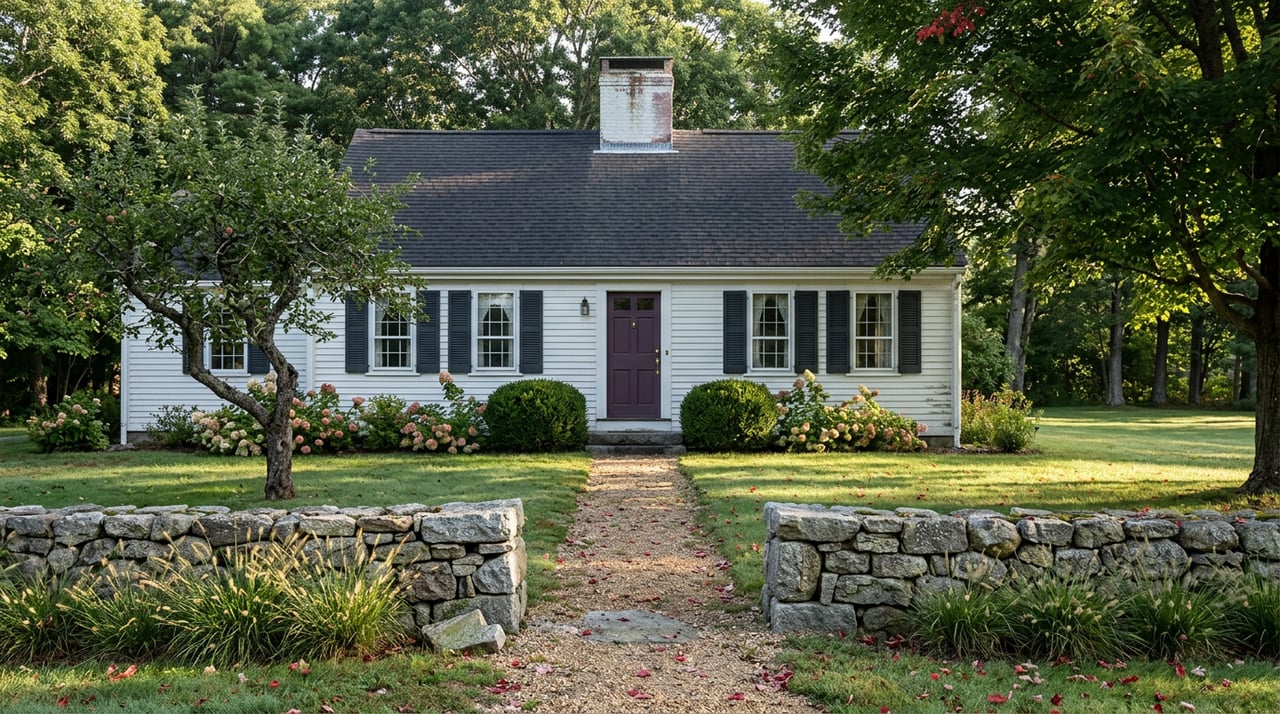
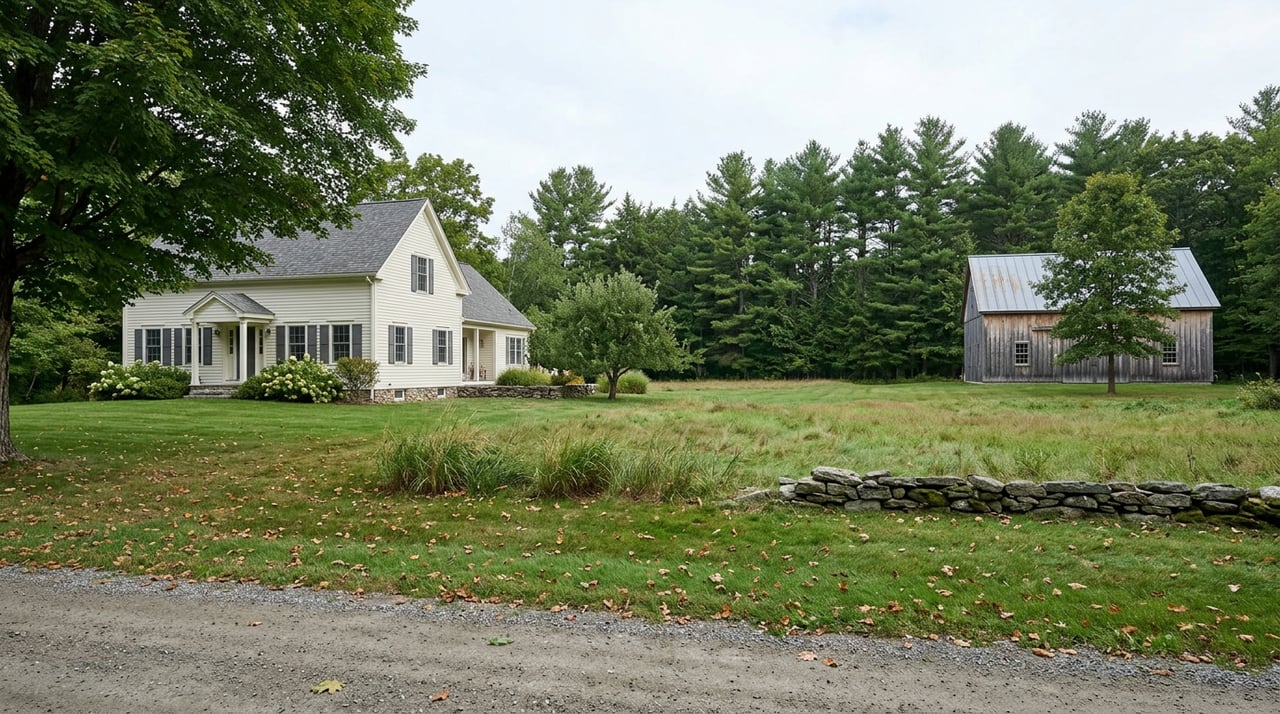
Dunbarton was already built for this kind of buyer. Properties here typically sit on five or more acres, and the town has a working equestrian culture to match, including barns, riding arenas, and hobby-farm setups that show up regularly in local listings. There are two golf courses in town, five public-access ponds, and a historical marker at the old Molly Stark House on Route 13, a reminder that this has been a working landscape for a long time before it became a commuter option.
What changed this year is the legal ceiling on that use. A buyer eyeing a five-acre parcel as recently as this past winter had to clear a Zoning Board special exception to open a small riding operation. Since this March's town meeting, that same use is permitted by right, subject only to site plan review. A buyer who wants to convert a detached barn into a standalone rental unit or a space for aging parents no longer has to attach it to the house or run the math on a floor-area percentage. And anyone whose property line sits close to where they'd want a coop or a run-in shed just got 50 feet of breathing room back.
New construction is showing up around this shift too. Owl's Nest Estates, a new open-space subdivision with paved roads currently being completed, is offering 2 to 2.4-acre homesites about ten minutes from I-93's Exit 10, close enough for a Concord or Manchester commute but built on lot sizes that only make sense in a town with Dunbarton's zoning posture.
None of that shows up in a median price. It shows up in what you're actually allowed to build once you own the dirt.
What to check instead of the median
If you're comparing Dunbarton to nearby towns, the more useful questions are these:
- Does the town's ADU ordinance match or lag the state's July 2025 standard? Some towns are still working through the update. Dunbarton has already adopted its version.
- What is the current animal-housing setback on the parcel you're considering? Fifty feet from a property line is very different math on a 2-acre lot than on a 10-acre one.
- If a riding or boarding use is part of the plan, does it require a special exception or is it permitted by right? That distinction changes your timeline and your risk before you write an offer.
- How many comparable sales actually happened in the past 12 months, not just what the median says? A town selling three or four homes a month deserves a closer look at the actual comps, not the headline number.
The town center still runs on a small footprint of its own: School Street Cafe for coffee, Curios on the Common for secondhand finds, and local growers like Chanticleer Gardens and Eden's Table Farm supplying produce and flowers. Anything bigger sends residents to Concord or Manchester, both under 15 miles away.
Frequently asked questions
Is Dunbarton's median price actually falling? As of May 2026, different sources on the same platform showed declines ranging from 13 to 16 percent year over year, but with roughly 41 annual sales townwide, a handful of transactions can move that number substantially. Treat any single-year percentage change here with caution.
Does the new ADU rule apply retroactively to existing structures? New Hampshire's statewide law allows conversion of structures that existed before July 1, 2025, even if they don't meet current setback or lot-coverage rules. Dunbarton's local ordinance was updated to align with that standard.
Do these zoning changes affect every lot in town the same way? No. Setbacks, lot size, and the specific district a parcel sits in still determine what's feasible. The changes lower the general barriers, but a site-specific review is still the only way to know what a particular property can support.
If you're weighing a move to a town where the acreage does more work than the address, the zoning conversation is worth having before the price conversation. Angela D Keef has been guiding buyers and sellers through central New Hampshire's small-town rules for years, and can walk you through what a specific Dunbarton parcel, or one in Weare or Bow, actually allows before you make an offer. Let's Connect.